Blog · Cannabis 101
How to Read a Cannabis Label: THC, Terpenes & Dosing
A cannabis label can look like a spec sheet. Once you know what a few numbers mean, though, it becomes the most useful tool for buying with confidence. Here's how to read one.
THC percentage: potency, not quality
The big number, often 18% to 35% on flower, is the share of the product's weight that is THC, the main intoxicating cannabinoid. Higher means more potent, but not automatically better. A well-grown strain at 24% with a rich terpene profile can deliver a far better experience than a harsh 32%. Treat THC as a guide to strength, and start lower if you're building tolerance.
THCa and "total THC"
On flower labels you will often see two THC figures, and the difference is worth understanding. Raw cannabis contains mostly THCa, an acidic form that isn't intoxicating on its own. When you heat it, by smoking, vaping or baking, THCa converts into THC. That is why a flower label may show a small THC number next to a much larger THCa number. Total THC is a calculation that estimates how much THC the product can deliver once heated, and it is the figure most useful for comparing one jar with another. Edibles, by contrast, are made with already-activated THC, so their milligram numbers are what you actually consume.
CBD and the minor cannabinoids
Below THC you'll often see CBD and minors like CBG and CBN. CBD is non-intoxicating and can soften THC's edge; CBN is associated with sedation. Products that pair THC with these can feel noticeably different from THC alone, worth a look if pure THC feels like too much.
Terpenes: the real personality
If any part of the label deserves more attention, it's the terpenes. These aromatic compounds shape both smell and effect:
- Myrcene, earthy, mango; associated with relaxation.
- Limonene, citrus; associated with bright, elevated moods.
- Caryophyllene, pepper, spice; associated with calm and body ease.
- Pinene, pine; associated with alertness and clarity.
- Terpinolene, floral, herbal; common in energetic strains.
When two strains have the same THC but feel completely different, terpenes are usually why.
Put It Into Practice
Flower on the Menu Now
Serving sizes, especially for edibles
For edibles, the number that matters is milligrams of THC per serving. In New York, a standard single serving is 10mg, and a package tops out at 100mg total. If you're new, start with 2.5–5mg and wait at least two hours, more in our edibles dosing guide.
Start low, go slow, you can always take more, never less.
Lab testing and the COA
Every legal New York product is lab-tested for potency and contaminants, and the label ties back to a Certificate of Analysis (COA). That testing, plus tamper-evident, child-resistant packaging and a batch number, is exactly what separates a licensed dispensary purchase from the unregulated market. If a deal skips the testing, it skips your safety.
Ratios like 1:1 and 2:1
Some products list a ratio rather than a single number. A 1:1 product contains equal amounts of two cannabinoids, usually CBD and THC, while a 2:1 product has twice as much of one as the other. Always check which cannabinoid is listed first, since brands write ratios in both directions. Some people find that CBD-forward ratios feel gentler and more clear-headed than THC alone, which makes them a popular option for cautious first-timers.
Vapes and concentrates read differently
Concentrate and vape labels can look alarming at first, with THC figures often well above 70%. That is normal for the category: the oil is a refined extract, so a single draw contains far less material than a puff of flower. The percentage tells you how concentrated it is, not how much you will take in. For a first try, one short draw and a ten minute pause is plenty. Terpene content matters here too, and some cartridges list the source strain so you can look up its profile in our strain guide.
Shop Vapes
Vapes and Cartridges in Stock
Dates, batches and freshness
Look for a packaging or harvest date. Flower is at its best when it is fresh, because terpenes are volatile and fade over time, taking aroma and some of the character with them. As THC ages it slowly breaks down into CBN, which is one reason older flower can feel sleepier and less vivid. Once you open a package, keep it sealed, cool and out of direct light. The batch or lot number is the key that links your package to its specific lab results, so hold on to the packaging until you have finished the product.
Buy with confidence
Now that the label makes sense, the fun part is matching it to what you want. Browse our strain guide to see how type, THC and terpenes line up across our menu, then shop for pickup or Westchester delivery. Still unsure? Our budtenders read these labels all day, just ask.
Good to Know
Cannabis Label FAQs
What does the THC percentage on a cannabis label mean?
The big THC number, often 18% to 35% on flower, is the share of the product's weight that is THC, the main intoxicating cannabinoid. Higher means more potent but not automatically better; a well-grown strain at 24% with a rich terpene profile can beat a harsh 32%. Treat THC as a guide to strength and start lower if you're building tolerance.
What are terpenes and why do they matter?
Terpenes are aromatic compounds that shape both a strain's smell and its effect, and they're often why two strains with the same THC feel completely different. Common ones include myrcene (earthy, associated with relaxation), limonene (citrus, associated with bright moods), caryophyllene (peppery, associated with calm and body ease), pinene (pine, associated with alertness), and terpinolene (floral, common in energetic strains).
What does CBD, CBG, and CBN mean on a cannabis label?
Below THC you'll often see CBD and minor cannabinoids like CBG and CBN. CBD is non-intoxicating and can soften THC's edge, while CBN is associated with sedation. Products that pair THC with these can feel noticeably different from THC alone, which is worth a look if pure THC feels like too much.
How do I read the dose on an edible label?
For edibles, the number that matters is milligrams of THC per serving. In New York, a standard single serving is 10mg and a package tops out at 100mg total. If you're new, start with 2.5 to 5mg and wait at least two hours before taking more.
What is a COA on a cannabis product?
Every legal New York product is lab-tested for potency and contaminants, and the label ties back to a Certificate of Analysis (COA). That testing, along with tamper-evident, child-resistant packaging and a batch number, is exactly what separates a licensed dispensary purchase from the unregulated market. If a deal skips the testing, it skips your safety.
Does a higher THC percentage mean better cannabis?
Not necessarily. THC percentage measures potency, not quality, and a well-grown strain at 24% with a rich terpene profile can deliver a far better experience than a harsh 32%. Terpenes and minor cannabinoids often matter more to how a strain actually feels, so treat THC as just a guide to strength.
What is the difference between THCa and total THC on a label?
THCa is the non-intoxicating acidic form found in raw flower, which converts to THC when heated. Total THC is a calculation that estimates how much THC the product can deliver once heated, so it is the most useful number for comparing flower. Edibles already contain activated THC, so their milligram figures are what you actually consume.
What does a 1:1 or 2:1 ratio mean on a cannabis product?
A ratio compares two cannabinoids, usually CBD and THC. A 1:1 product has equal amounts of each, and a 2:1 product has twice as much of one as the other. Check which cannabinoid is listed first, since brands write ratios both ways. Some people find CBD-forward ratios feel gentler than THC alone.
See It in Person
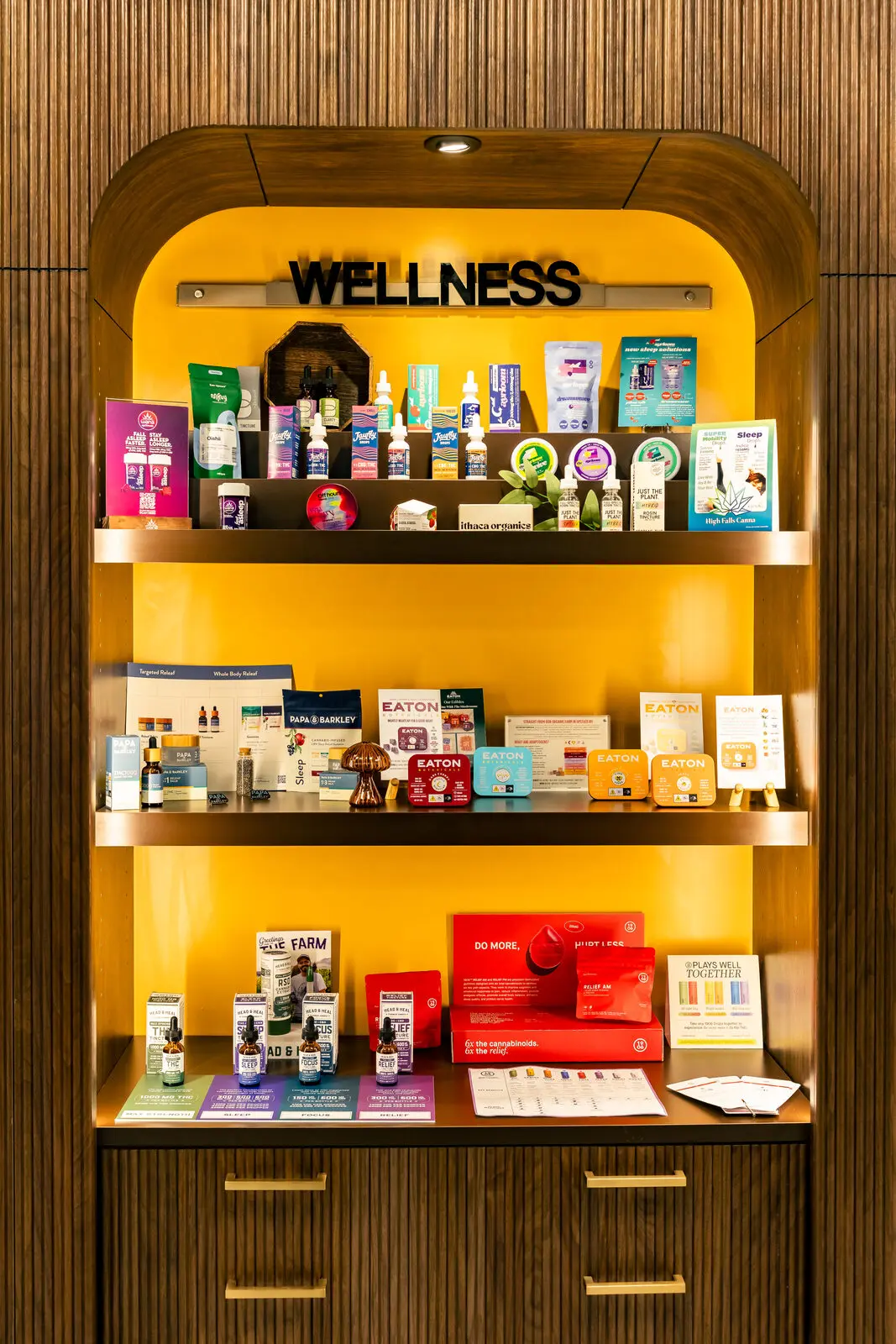
Labels, Explained at the Counter
Bring your questions to the New Rochelle flower bar. Our team will help you read any label, from THC and terpenes to dose per piece.
Hours & Directions